
Decision Intelligence: From Data to Action in Logistics
Data without decisions is waste. Learn how decision intelligence transforms logistics analytics from descriptive to prescriptive.
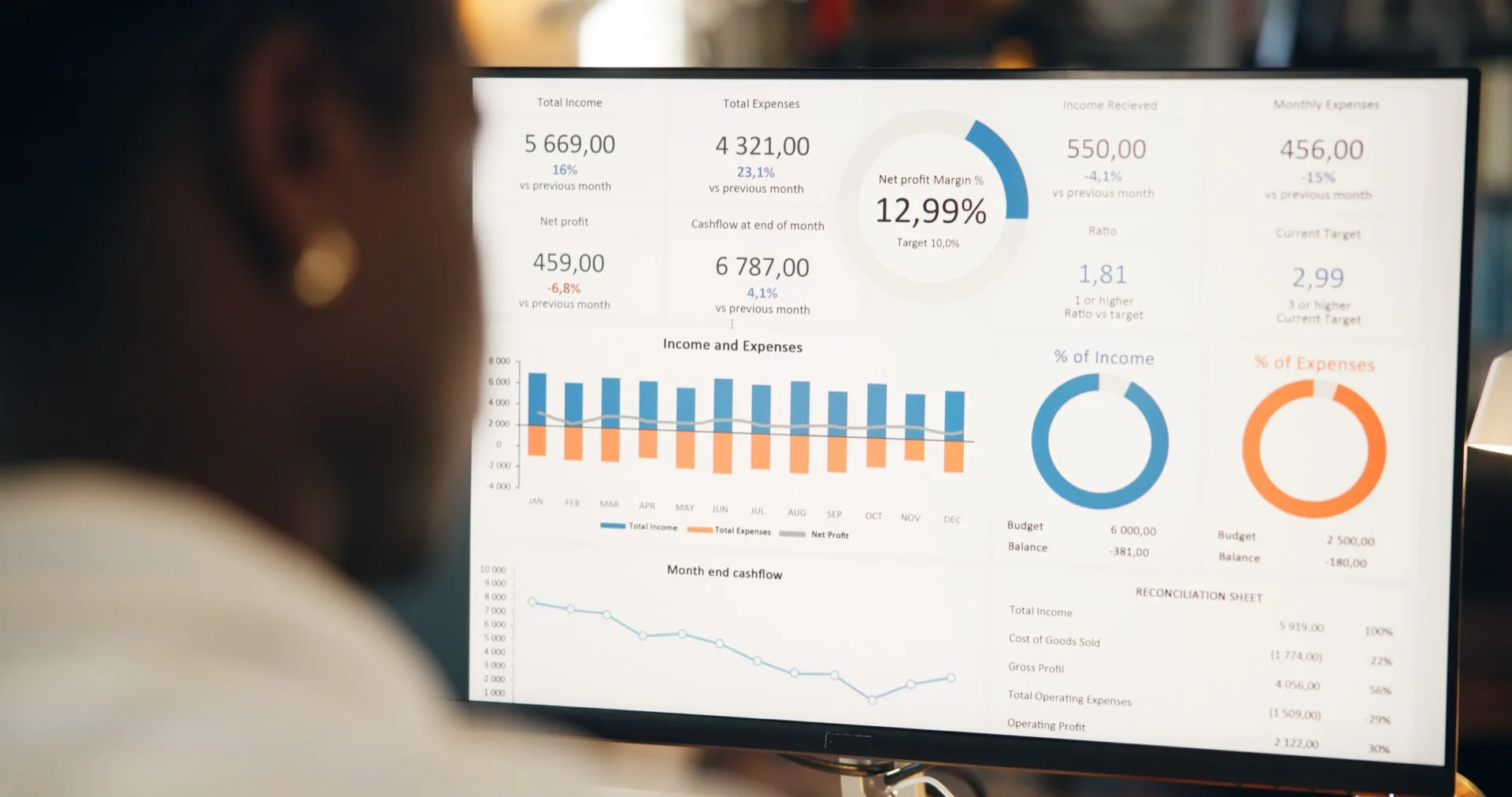
The Intelligence Gap in Logistics Analytics
Logistics companies have spent years building out data collection. The TMS captures detailed shipment records, the financial system tracks every invoice and payment, and carrier portals feed in tracking updates and performance data. The infrastructure is in place. Yet most logistics leaders would quietly admit that their decision-making has not improved in step with what they have spent on data.
The reason is a gap between data and decisions. Having data is not the same as having intelligence. Intelligence is data that has been analyzed, contextualized, and structured to support a specific decision. Most logistics analytics programs stop at the descriptive stage — telling you what happened — without progressing to the diagnostic, predictive, and prescriptive stages that actually change outcomes.
Decision intelligence bridges this gap by treating every analysis not as an end in itself, but as an input to a specific decision with a specific owner and a specific timeline.
The Analytics Maturity Pyramid
Analytics maturity in logistics follows a four-stage pyramid, with each stage building on the one below:
Descriptive analytics answers "what happened?" — last month's revenue was €2.3M, on-time delivery was 91%, top carrier handled 34% of volume. This is where most logistics companies operate. Descriptive analytics is necessary but insufficient. It documents the past without explaining it or guiding the future.
Diagnostic analytics answers "why did it happen?" — margins dropped because Carrier X increased rates by 12% on the Hamburg-Shanghai lane, affecting 340 shipments. Diagnostic analytics requires drill-down capability and cross-dimensional analysis. It explains the past but does not predict the future.
Most logistics companies are stuck at descriptive analytics — they know what happened but not why, and they certainly cannot predict what will happen next or what they should do about it.
Predictive analytics answers "what will happen?" — based on current trends, Carrier X will handle 40% of volume by Q3, increasing concentration risk above the threshold. If current margin erosion continues on the Asia-Europe lanes, quarterly profit will decrease by €45K. Predictive analytics uses statistical models and trend extrapolation to forecast outcomes.
Prescriptive analytics answers "what should we do?" — redistribute 15% of Carrier X volume to Carriers Y and Z to reduce concentration below 30%. Reprice the Hamburg-Shanghai lane by €80 per TEU to restore target margin. Prescriptive analytics combines predictions with business rules to generate specific, actionable recommendations.
Building a Decision Framework
Decision intelligence requires a framework that connects every insight to an action. The framework has four components:
- Decision catalog: A documented list of recurring decisions — carrier selection, lane pricing, customer retention interventions, capacity allocation. Each decision has a defined owner, frequency, and data requirements.
- Trigger criteria: The conditions under which a decision must be made or revisited. Margin drops below 8% on a lane? That triggers a pricing review. Carrier OTD drops below 85%? That triggers a performance escalation. Triggers ensure that decisions are made proactively rather than reactively.
- Action options: For each decision, a predefined set of possible actions with expected outcomes. This prevents analysis paralysis by constraining the decision space to practical options that have been vetted in advance.
- Feedback loop: Track the outcomes of decisions to refine future recommendations. Did the pricing adjustment restore margin? Did the carrier escalation improve OTD? This closes the loop and enables continuous improvement.
Proof, not a pilot
Put this to work on your own operational data.
No integration project. No black box.
Start a 90-Day Proof of ValueFrom Insight to Action: Ownership and Timelines
The single biggest failure in logistics analytics is the gap between insight and action. A report identifies a problem — margin erosion on a specific lane — but no one is assigned to fix it, no deadline is set, and by the next reporting cycle, the insight is buried under new data. Decision intelligence closes this gap by making every insight actionable.
Each recommendation in a prescriptive analytics framework must have three attributes: an owner (who will take the action), a deadline (by when), and a success metric (how we will know it worked). Without all three, the recommendation is just a suggestion that will be forgotten.
Syntask embeds action frameworks directly into its reporting, linking every identified issue to a recommended action, an owner, and a timeline. This transforms reports from passive documents into active management tools that drive accountability and follow-through.
Implementing Decision Intelligence: A Practical Approach
You do not need a PhD in data science to implement decision intelligence. Start with three high-impact decisions that your organization makes regularly:
- Lane pricing reviews: When should you reprice a lane? Define the margin threshold that triggers a review, the data needed (current margin, volume, competitive rates), the decision owner (commercial manager), and the action timeline (within 5 business days of trigger).
- Carrier performance escalation: When should you escalate a carrier's poor performance? Define the OTD or damage threshold, the escalation path (operations manager → procurement → executive), and the resolution timeline.
- Customer retention interventions: When should you proactively reach out to a customer showing signs of churn? Define the volume decline threshold, the outreach owner (account manager), and the response timeline.
For each decision, document the trigger, the data inputs, the action options, and the success metric. Then configure your analytics platform to monitor triggers automatically and generate recommendations when thresholds are breached. This is decision intelligence in practice — not a technology project, but a management discipline enabled by technology.
Measuring Decision Quality
The ultimate measure of an analytics program is not report accuracy or dashboard usage — it is decision quality. Are we making better decisions than we were six months ago? Track decision outcomes against their success metrics. Calculate the financial impact of actions taken versus the cost of inaction. Over time, this creates an evidence base that demonstrates the ROI of analytics investment and guides further refinement of the decision framework.
Put this to work on your own operational data.
Start with one lane, one workflow, one decision. Measure impact. Expand when value is proven.
No integration project. No black box.
Written by
Berna Bulgurcu
Co-founder & CEO, Syntask
The Syntask team writes about operational decision intelligence for logistics — turning the data teams already have into prioritized, evidence-backed decisions.
Topics
- AI Analytics
- For COOs
- Decision Making