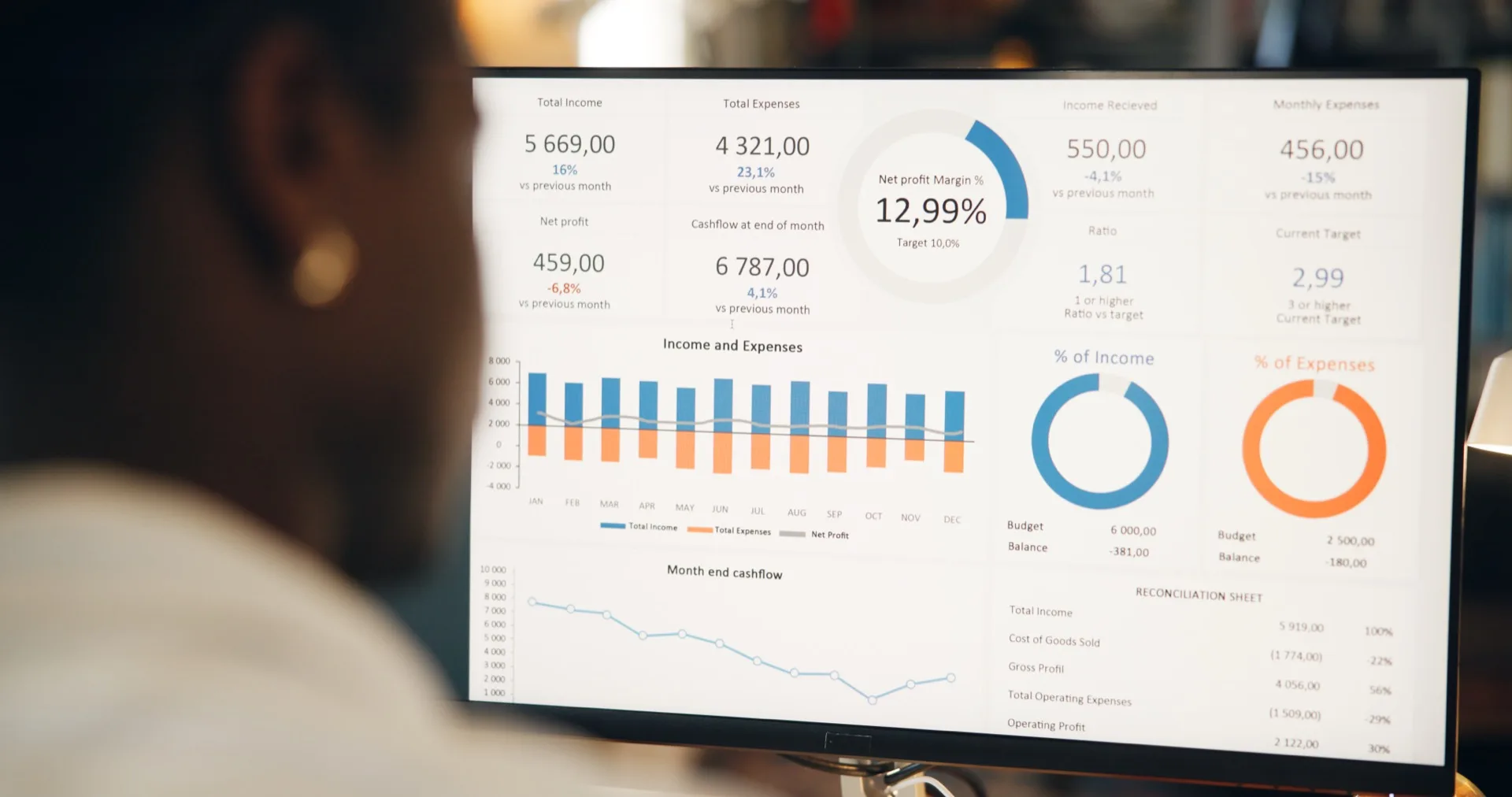
Build a Monthly Executive Logistics Report in 5 Steps
A well-built executive report tells the story of your logistics operation in two pages. Follow these five steps to create a report your leadership team will actually read and act on.

Where the Monthly Report Loses Its Audience
The typical monthly logistics report lands in executive inboxes as a 15-page PDF packed with tables, charts, and metrics. The CEO skims page one. The CFO jumps to the cost section. The COO searches for the KPIs they care about. Everyone extracts a fragment of what they need and ignores the rest. Within six months, the report becomes another artifact that gets produced but rarely drives action.
Effective executive reports are different. They are short — two pages maximum — focused on outcomes rather than activities, and structured to answer the three questions every executive has: What happened? Why did it happen? What should we do about it? Here is how to build one that works.
Step 1: Define the Five Metrics That Matter
An executive report should contain no more than five headline metrics. More than that dilutes attention and forces readers to decide what is important — which is your job, not theirs. Select metrics that represent the dimensions your leadership team cares about most:
- Financial: Gross margin percentage or total logistics cost as a percentage of revenue
- Service: On-time delivery rate or customer satisfaction score
- Efficiency: Cost per shipment or cost per unit shipped
- Growth: Shipment volume trend or new customer acquisition
- Risk: Claims rate, compliance incidents, or carrier concentration score
Each metric should have a target, a current value, a trend indicator (improving/declining/stable), and a comparison period (month-over-month and year-over-year). Present these five metrics at the top of the report in a format that takes 15 seconds to read — large numbers, color-coded, with directional arrows.
Tailoring Metrics to Your Audience
If your executive team includes both a CFO and a COO, their priorities differ. The CFO wants margin, cost trends, and cash flow impact. The COO wants throughput, service levels, and operational bottlenecks. The best executive reports include a shared set of enterprise metrics plus a brief section for each functional perspective. Syntask's reporting module lets you configure role-based views so that each recipient sees the metrics most relevant to their responsibilities without receiving a generic report that serves no one perfectly.
Step 2: Add the Narrative — What Happened and Why
Numbers without context are noise. Below the headline metrics, include a three-paragraph narrative that explains the month's story. The first paragraph summarizes overall performance in plain language: "March was a strong month operationally — on-time delivery improved to 94.2% while gross margin held steady at 18.3% despite rate increases on trans-Pacific lanes." The second paragraph explains the key drivers behind any significant changes. The third paragraph identifies emerging trends or risks that may not yet appear in the metrics but warrant attention.
This narrative is where your expertise adds the most value. The numbers can be generated automatically, but the interpretation requires understanding of your business context — a margin dip caused by a strategic rate reduction to win a large account is fundamentally different from one caused by carrier cost increases.
Proof, not a pilot
Put this to work on your own operational data.
No integration project. No black box.
Start a 90-Day Proof of ValueStep 3: Include One Deep-Dive Section
Each month, select one topic for a half-page deep dive. This keeps the report fresh and ensures that important issues get adequate attention without bloating the core report. Examples:
- Lane profitability analysis showing margin by trade lane with recommendations for rate adjustments
- Carrier performance review comparing the top five carriers across cost, reliability, and claims
- Customer concentration analysis showing revenue distribution and dependency risk
- Cost trend analysis projecting next quarter's logistics spend based on current trajectory
Rotate topics monthly so that over the course of a year, you have covered all major operational dimensions. Announce the next month's topic at the end of each report so leadership can request a different focus if something more pressing has emerged.
Step 4: Close with Actions and Decisions Needed
The most important section of an executive report is the last one: actions and decisions. Every executive report should end with a numbered list of 2-4 specific items that require leadership awareness or decision. These should be concrete and time-bound: "Recommend renegotiating the XYZ Carrier contract before June renewal — current rates are 12% above market" or "Approve investment in automated invoicing to recover estimated $200K in annual billing errors."
This section transforms the report from information delivery to decision facilitation. It gives leadership a clear agenda for the monthly logistics review meeting and ensures that the data presented leads to action rather than just acknowledgment.
Step 5: Automate Everything Except the Narrative
The metrics, charts, comparisons, and formatting should be fully automated. Manual report generation is slow, error-prone, and unsustainable. Syntask automates the data collection, metric calculation, and report formatting — generating the core report automatically on the second business day of each month. Your role shifts to reviewing the automated output, writing the narrative and deep-dive section, and defining the action items. Total time investment: 2-3 hours per month instead of the 2-3 days that manual reporting typically requires.
The result is a report that is consistent, timely, and actually useful. Leadership learns to expect it, trust it, and act on it — which is the entire purpose of executive reporting.
Put this to work on your own operational data.
Start with one lane, one workflow, one decision. Measure impact. Expand when value is proven.
No integration project. No black box.
Written by
Berna Bulgurcu
Co-founder & CEO, Syntask
The Syntask team writes about operational decision intelligence for logistics — turning the data teams already have into prioritized, evidence-backed decisions.
Topics
- Business Intelligence
- For CFOs
- How-To Guide
- Best Practices